
Key takeaways
- Walk the house after winter and look for damage.
- Clean gutters and check downspouts before heavy spring rain.
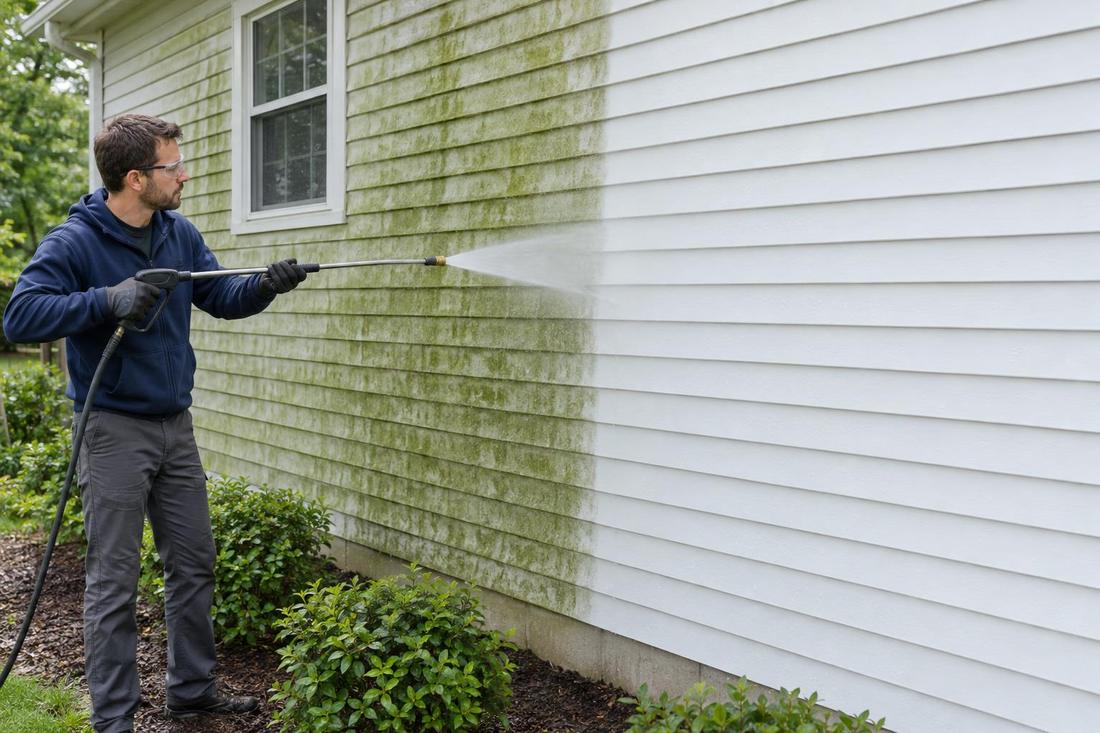
- Wash off pollen, mildew and winter grime.
- Seal gaps, fix loose boards and check decks and fences.
Roof and gutters
Look at the roof from the ground for missing or lifted shingles. Clear gutters of winter debris and flush the downspouts. Check that water flows away from the foundation.
Trim branches that touch the roof.
Siding, trim and windows
Check siding for cracks and loose boards. Look at window and door caulk for gaps. Probe trim near the ground for soft spots. Wash the house to remove pollen and mildew.
Small repairs now prevent bigger ones later.
Decks, fences and concrete
Check deck boards, railings and stairs for loose or rotted parts. Look at fences for leaning posts. Check concrete for new cracks. Clean and seal as needed once the wood and concrete are dry.
Test water absorption on wood to see if it needs a new finish.
Around the yard
Check that sprinklers do not spray the house. Make sure the soil slopes away from the foundation. Trim shrubs back from siding to let walls dry.
A tidy yard helps the exterior stay clean.
Official sources and further reading
- University of Tennessee Extension
- U.S. Department of Energy: Energy Saver
- National Association of Home Builders
These are independent organizations. Links open in a new tab.
Quick answers
When should I do a spring check?
Once the weather settles in early to mid spring is a good time.
What is the most important spring task?
Clearing gutters and checking drainage often prevents the most damage.